
Adventures in Indigenous Knowledge
When the locals don’t have a clue.

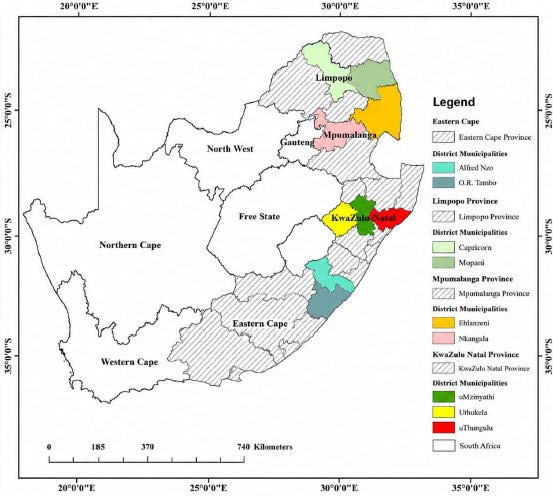
Figure A.2. from Ndlangamandla et al. 2026
I was not a happy camper at the end of my first year in psychology graduate school at UPenn. My solution was to apply to law school. I had taken the LSAT in Berkeley the year before and my scores were good, especially considering that to distract myself the night before the exam I went to a double feature of Pink Flamingos and Female Trouble. (I had no idea then who John Waters was; years later I would interview him for my book.) In the end, my thesis advisor “forgot” to mail my law school letters of recommendation, leaving me stranded at Penn.
In my second year, I started taking graduate classes in the Biology Department because my research interests were mainly evolution and behavior, and because the bio grad students liked to drink beer and trade stories. They were much better company than the dweebish niblicks in psych.
Eventually I found myself on a ten-day field trip to Costa Rica supervised by Professor Daniel Janzen, arguably one of the world’s greatest muddy boot biologists. For my project I live-trapped and identified rodents at the study site, the Parque Nacional Santa Rosa. Each morning I retrieved cages containing a motley assemblage of rodents large and small. As this invariably drew the attention of the local national park workers, I figured it was a good opportunity to collect indigenous knowledge regarding the local species—you know, like the twenty-seven different names Eskimos have for snow.
So I pointed to each cage and asked “what do you call this?”
For the rice rat they said “ratón.” For the little harvest mouse they said “ratón.” For the large, glossy, chesnut brown spiney rat they said “ratón.” And that was the end of my foray into indigenous field biology.
In 2018 Joseph DiVerdi and I published a study on aroma variation across different Cannabis varieties—the first time anyone had quantified weed aromas using consumer sniff panelists. It’s been cited a lot and often in unexpected places, the most recent being a paper titled Exploring Indigenous knowledge on cultivation, uses and morphological differences of Cannabis landraces in South Africa.
The authors conducted an ethnobotanical survey of 95 growers across four provinces in South Africa. The survey covered a lot of topics but a couple of questions caught my interest. Ninety-seven percent of participants recognized and identified different Cannabis landraces using 25 colloquial names. Cool! Just like Eskimo snowflake names!
Well, not quite. It seems that individual landrace names cover a range of growth forms and scent types, and there is a lot of morphological and olfactory overlap between them. Indigenous South African Cannabis taxonomy is only slightly more precise than indigenous Costa Rican rodent taxonomy.
Oh, well. It was good try!
Vuyisile Valencia Ndlangamandla, Adeola Salawu-Rotimi, Vuyiswa Sylvia Bushula-Njah, Gugu Fortunate Sibandze, Nompilo Lucia Hlongwane, Fikisiwe Cynthia Gebashe, and Nokuthula Peace Mchunu. Exploring Indigenous knowledge on cultivation, uses and morphological differences of Cannabis landraces in South Africa. Systems Ethnopharmacology and Sustainable Bioresources 2:100029, 2026.
As I finished reading this, I heard the sad trombone in my head.
May I offer an update to the words for snow cliché? I am not Indigenous. I had the pleasure and honour to learn some Inuktitut in a sociolinguistics class at university, and I live in Edmonton in Treaty 6 territory, home to the largest population of Inuit people south of the 60th parallel. You may find the clarifications in this short article interesting. https://www.languagesandnumbers.com/articles/en/inuktitut-hundred-names-for-snow/